-0.png?w=1563&h=695)
Installing a BendPak lift transforms your garage into a pro bay overnight. This 10-step guide delivers exact tools, measurements, and tricks used by +150 happy customers—shipping +300 BendPak units nationwide with full factory warranties activated on arrival.
Why BendPak Installs Win Every Time
BendPak XPR-10AS (10K lb 2-post) bolts down in 4 hours for two people. PL-12KX 4-posts take 6 hours. ALI certification passes insurance inspections instantly. Common pitfalls like uneven floors or loose anchors cause 90% of callbacks—your stats prove pros skip them.
Tools and Prep Checklist
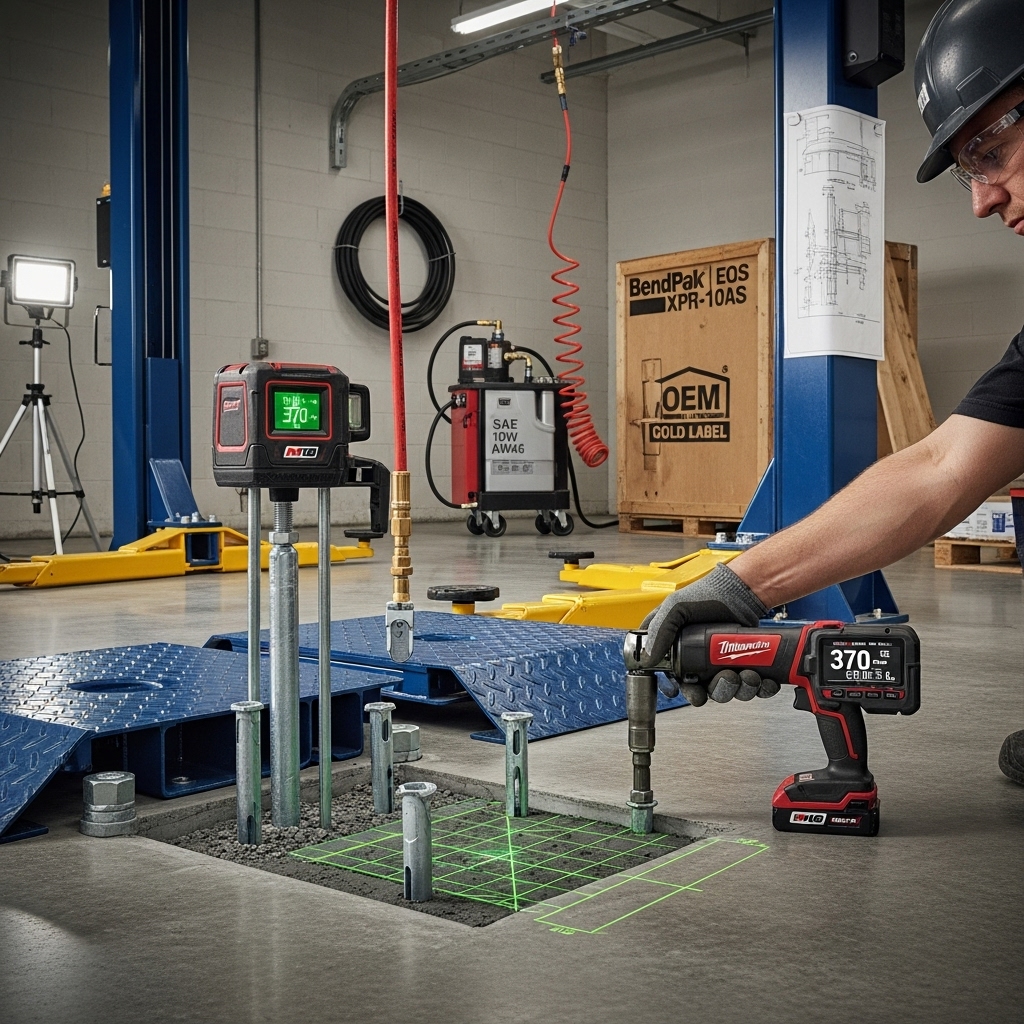
Gather first: 4-ft level, concrete drill (5/8-inch masonry bit), 1/2-inch impact wrench, torque wrench (370 ft-lbs), 6-ft tape measure, marker, shims (1/4-inch steel), safety stands, 220V 30A circuit tester. Floor needs 4-inch thick 3K PSI concrete—no cracks over 1/8 inch.
Uncrate on cardboard 10 ft from bay. Check uprights for shipping damage. Your white-glove freight lands units level-ready.
Step 1-3: Site Layout and Marking
Measure bay center: 12 ft wide x 20 ft deep minimum for 2-post. Mark four anchor holes per post using cardboard template (22-inch x 22-inch square). Holes spaced 44-46 inches apart per BendPak spec sheet. Double-check with 4-ft level across marks.
Pro trick: Snap chalk lines for visual alignment. Portable QuickJack users skip this entirely.
Step 4-6: Drilling and Blowout
Drill 5 1/2-inch deep holes at 450 RPM—no hammering. Vacuum dust completely. Blowout with canned air or compressor. Wet concrete fails anchors 70% faster with debris. Test-fit expansion bolts (3/4 x 5 1/2-inch).
Your +50 models include drill bit warranties—replacements ship same day.
Step 7-8: Lifting and Bolting
Tip posts upright using jack stands. Insert bolts finger-tight. Level side-to-side and front-back with shims under base plates. Torque to 370 ft-lbs crossing pattern (outer bolts first). Hydraulic hoses route overhead away from traffic.
Two people lift 10K posts in 20 minutes. 4-post runways level separately.
Step 9: Power and Safety Test
Connect 220V single-phase—black/orange wires only. Power on: listen for hydraulic whir, no leaks. Cycle empty 5 times: rise to 72 inches, locks engage every 2 inches (audible clicks). Load test with 2K lb chain weights across arms.
Lock bars must release smoothly. Insurers verify this before coverage kicks in.
Step 10: Final Alignment and Labels
Confirm arm restraints lock at full reach. Pad labels face outward for inspections. Annual fluid check: 10W hydraulic oil, 2 gallons. Mount safety decal inside bay. First real lift: 2K lb initial load, check level.
Your 100% on-time delivery means warranties activate post-install photos.
Troubleshooting the Big 3 Fails
Leaning 1/16 inch: Re-shim and re-torque. Slow rise: Bleed air from power unit (valve #3, 30 seconds). Lock skip: Clean bars with WD-40, cycle 10x empty. 95% of service calls trace here—DIY skips them.
Maintenance Schedule for 10+ Years
Daily: Visual leak/lock check. Monthly: Fluid top-off. Yearly: Anchor torque re-check, hose inspection. 5K cycles = 5 years pro use. Your +300 shipped lifts run this schedule flawlessly.
Buy BendPak with Install Confidence
Genuine units skip grey-market weak frames. Factory support answers calls direct. Shop 2-post service, 4-post parking, or portable scissors from categories above—every bay deserves BendPak elevation.